Showing posts with label Booze. Show all posts

Saturday, June 20, 2009

Mighty Arrow Pale Ale by New Belgium Brewing Co.

Me and hops have a very odd relationship. Always have and as far as I can tell, we always will. You see, while I accept and am totally OK with the fact that hops are a part of the brewing process, I am of the belief that the American brewer in many cases has taken the use of hops to such an extreme level as to make their beers close to undrinkable. I am of the (apparently unpopular) belief that a beer should not taste like a bar of soap (see: Sam Adams), nor should it be so bitter as to be undrinkable (see: Hop Devil among others). In much the same way as I (and most other people) enjoy a little tannin in a bottle of Cabernet Sauvignon but too much ruins it, I want a little hop in my beer but I don't want to be overwhelmed with piney bitterness. Hops is the "spice of beer," and I don't want it over-hopped anymore than I want a cook to dump an entire jar of black pepper in my soup.


Hops perform two functions in the brewing process. They're used to add flavor (again, the "spice of beer") and they act as a stabilizing agent/preservative. A story I've recounted dozens of times (and oddly enough, seems to impress chicks....which I totally don't understand) is that the foundation of the over-hopped beer is the India Pale Ale (IPA), and that it was over-hopped out of necessity-not because they necessarily liked the flavor. When English beer couldn't survive the trip by boat from England to India (then a British colony) without spoiling, thus depriving the English settlers beer (a problem, I admit), some clever brewer realized if you dump a boatload of hops into the casks of beer during the brewing process, it would preserve the beer long enough to survive the trip by ship to India. Voila, now you've got Indian Pale Ale and a bunch of happy English settlers in India. A practical solution to a real problem.


It isn't that people like IPAs that bothers me, everyone is obviously entitled to their own taste in beer, its how the thought process behind the IPA has spilled over into other American beers. Sure an American Pale Ale should be hoppy, it just shouldn't be overly hoppy. It's a Pale Ale, not an IPA. And I think that's my beef with New Belgium's Mighty Arrow Pale...it follows this new trend of making Pale Ales into IPAs.


Which isn't to say it's terrible, it's just not my taste. It's got nice head and a nice body, pours a clear orangish color...from the appearance it looks excellent. But after you take that first sniff, you are just overpowered by bitterness. Sure there's a little orange, but it's mostly just floral bitterness. The taste? Well it's just more of the same. Bitter on the front, bitter on the end....a little caramel and a little citrus mixed in, but at it's heart it tastes like hops. I wouldn't recommend it, but if you're an IPA person, you may very well like it.

Tuesday, June 2, 2009

Va de Vi Sparkling Wine


In my line of work, we get to taste a lot of wines. I know-you feel bad for me, right? But its one of those things that comes with the territory, and one of the things I not only relish but also find to be necessary for the performance of my job. The portfolio I represent is vast to say the least, and while I can't be intimately familiar with every potential vintage of every wine I do sell, I do my best to have atleast an honest opinion of most everything I do sell. And while I sometimes am required to sell something that-as a person that appreciates good wine-isn't something I particularly care for, sometimes I also get the oppurtunity to sell something which I'm not only impressed with, but fervently enjoy and want to share with other people. Yesterday we kicked off a brand that I can honestly say that I feel that way about, as we kicked off Gloria Ferrer's (who's parent company is Spain's Freixenet, the largest sparkling wine producer in the world)new Va de Vi sparkling wine.

Now I must admit off the bat, I'm a sucker for good bubbly-it seems to be a bit of a family curse, as at family gatherings Champagne doesn't tend to last long. But this was one of those rare wines that I tasted and immediately thought, "Damn, thats a nice bottle of wine" and then took out to my customers and had every last one of them remark something similar and then order cases-not a case, but cases. So what is it?

Va de Vi is Gloria Ferrer's version of an "extra dry" similar to how White Star is Moet & Chandon's. But you see, in confusing Champagne and sparkling wine nomenclature, extra dry is actually sweeter than brut (the driest of the sparkling wines)-a fact that most people don't know. Brut has the smallest dosage (sweetness added to the wine during production) at 15g or less per a liter followed by Extra Dry(25g or less), Sec, Demi-Sec, and Doux in order. Want a little more wine nerdiness? In the US the regulations are lax to say the least for sparkling wines and products such as Andre Brut have over a 20g/L dosage and Cooks Brut and Extra-Dry have virtually the same dosage (25g and 26g/L respectively). The end result is American sparkling wines can label themselves as pretty much anything and while the French and Spanish have tight regulations on labeling, Americans in general don't understand them.

Fun, right?

Which brings us back to Va de Vi. As what would be characterized as an "extra dry" in Europe (it's made in Carneros, CA from Carneros grapes), it does have a bit of sweetness to it-but nothing like a spumante. It's not a sugary sweetness, but instead a very natural and fruit forward one-peaches would be the way I'd describe it. And unlike most Champagnes which are made with something like 33% Pinot Noir, 33% Pinot Meunier, and 33% Chardonnay Va de Vi is 89% Pinot Noir, 8% Chardonnay, and 3% Muscat (hence the peaches and tropical fruit). It's got the body of a great sparkling wine, as well as the structure....there's enough acid to complement the sweetness but not too much of either. In short, it's fantastic...and this is coming from someone that generally shuns sweeter wines. And what's more, it's got a retail bottle price of under $20.....which, with most Champagnes retailing at $40 or more, makes it quite the bargain-especially considering it's competitive quality-wise with most Champagnes.

It's a new product so far launched in only three US markets (Dallas, Seattle, Denver) and not found in grocery distribution, but if you happen upon it I can't recommend it enough. I'm doing a wine tasting for some friends in a couple weeks and this bottle of wine just made the list. If you're in Dallas, you can find it at Kindred Spirits, Mike's, Cork n' Bottle, Parkit Market, and Payless Discount among others. Give it a try, and please....let me know what you think. Cheers!

Monday, January 19, 2009

Shiner 100


Back in September of last year I reviewed Shiner '99, the Spoetzl Brewery's final anniversary offering before the Shiner 100 was going to pop up in 2009. Well the day the calender turned it seems, Shiner had their trucks shipping the 100 all over the state and last week I finally had a chance to try Shiner 100 for myself.

But before I get to the 100, let's review what they've done to get us here. Shiner '96 was the first anniversary beer and it was a Marzen style ale. '97 was a Bohemian Black (now marketed as Shiner Black), '98 a a Bavarian Style Amber, and as mentioned above '99 was a Helles lager. So while all have been done in an "old-world style," they've been fairly good about changing things up and brewing different styles-and honestly I've been excited to try each new one, even if they tended to be very different from an actual European equivalent of their namesake styles.

Shiner 100 follows in that legacy in most every way. It bills itself as a starkbier which means it should be strong, though it's really not that strong at 6.7% ABV (atleast compared to the 8% or 10% you will find in Maredsous) and while Shiner hasn't released a whole lot else about the style, I'm guessing it's supposed to be akin to a dopplebock, which is to say just a stronger and darker version of a bock beer-which is a good thing since bock is what Shiner does best.

Poured into a glass it has very little head (as do most Shiner brews), a nice copper/ruby/tawny color with tan head, and it laces nicely as you drink it down. The nose is fairly unpronounced smelling what I can best describe as, well, like Shiner bock-maybe a little sweeter. On the taste, it has that tinge of metallic tasting hops that is vintage Shiner bock, but otherwise very understated hops. It's primary flavor is fairly dark roasted malt, but its an extremely complex malt showcasing both sweetness and bitterness which then plays off the alcohol which is evident. It's a little more effervescent than I'd like for the style, but in the end I find myself extremely impressed. As the anniversary beer they've been building up to over the past few years, I think Shiner 100 delivers and is the best of the lot. In many ways, I drink it thinking it's just a better version of Shiner Bock-it tastes very similar but has a better mouth feel, more complex flavors, and a little more alcohol. In short, if you like Shiner Bock I'd be willing to wager you should also really like Shiner 100.

B.R. Cohn Olive Hill Vineyard Cabernet (2005)


I think this is probably the fourth or fifth time that I've had a wine from B.R. Cohn, to the best of my memory each of them have been cabs, and I've come away from them fairly unimpressed. It's not that they were bad wines, quality wise they were very nice, its just that they were fairly unspectacular, fairly simple. They tasted like a California Cab normally does, and my thought process was if I wanted an unspectacular California Cab, I would be just as well off grabbing a bottle of Clos du Bois or J. Lohr and save myself the money.

This bottle however changed that opinion. I recieved it as a gift a few months back and this past weekend decided to open it up to go with a steak, and I was extremely pleased. Best I can tell it is 100% Cabernet Sauvignon, was aged 24 months in new French Oak, and the AVA is Sonoma County (but Olive Hill Estate Vineyard subset). The primary flavors on it were cherry with a little bit of plum and black currant and this was countered perfectly with a fair amount of oak and a softened tannin. The flavors were very concentrated and explosive and the finish was excellent. Not an oaky Cab, but instead an extremely balanced and well rounded one where each of the flavor components complements the other nicely-and complemented the steak extraordinarily. Now to be fair it's a $50 bottle of wine, so it damn well better be good, but at the end of the bottle I found myself quite pleased with it.

I'm not sure who in this economy has $50 lying around for a bottle of wine (which isn't to say I'm not hoping there are lots those people in Dallas), but if you do I'd have no problem at all recommending the B.R. Cohn Olive Hill Cab.

Tuesday, December 23, 2008

Shiner Cheer


If you're a fan of good beer (and who isn't?), then Winter is the season for you. I mean sure there are some nice Spring and Fall seasonal brews, and even a few decent summer ones (St. Arnold's Lawnmower comes to mind), but Winter is when breweries usually pull all the stops and make some great dark beers that confuse the palate and stretch the lines of what beer can be.

With the Spoetzl Brewery being one of my favorites on account of their still-amazing Shiner Bock (and their new series of yearly brews, capping next year on their 100th anniversary with Shiner 100), I couldn't wait to get a chance to try their Winter seasonal, Shiner Cheer.

A bit of a disclaimer first though. I can't say I'm real high on fruit in beer. I mean I love Pyramid Apricot on a nice warm day, and I'll occasionally throw a lime in a Mexican beer or an Orange slive in a Hefeweizen, but as a general rule I'd like my beer to be beer and not a beer/fruit juice hybrid. So I was a little unsure going in when I learned that it was an Ale brewed with peaches and pecans (though those are Texas staples, so it's not terribly surprising). It's been strangely tough to come by for the past few weeks, but I finally got some.

It's got an unusual ruby/brown color to it, but it pours nicely. The head comes out like it should, and in the end it looks like a beer should. Upon tasting, the first thing you will taste is that classic Shiner bitterness (I recognized it immediately from the Bock) caused by burning the malt. It's not a bad thing, in fact it's what makes the Shiner Bock what it is, but it's definately noticeable here and it lingers. The pecans are very understated, but after a couple seconds the peaches become blatantly obvious. It's strange, it takes a few seconds before the flavor of peach kicks in, and even when it does it's fairly understated-theres just enough peach to let you know that it's there. In fact, the peaches were much more evident on the nose, which I found surprising.

In the end though, I'd rate it a good beer-but not a great one. It doesn't have that heaviness that is generally associated with a Winter beer (to warm you) and that you'd expect. The peach flavor is nice, but overall the beer is generally unremarkable. A little malt bitterness, a little peach, and that's it-its honestly just a little too simple for me. I'm not sure that there's enough peach to satisfy those who like a sweeter beer, and I don't think those that like a heavy beer will be terribly moved by the peaches. I'd suggest that it's a good beer to try, and I'm glad that I did, but I couldn't see myself having it more than a couple times before the end of winter.

Tuesday, December 9, 2008

Balvenie Doublewood 12 Year


A month after trying the Macallan Fine Oak and loving what I tasted, I decided to give the Balvenie Doublewood a try. Unlike the Macallan which was aged 10 years, the Balvenie was aged 12 years however much like the Macallan it is aged in two different oak casks, in this case a traditional oak whisky cask and an oak sherry cask. It's 43% alcohol (86 proof) and runs approximately $42.


I got it home, poured it in a nice open whisky glass, poured a little chilled water on top of it, swirled it around and then took my first sniff and then sip. Not terribly impressed. So I gave myself a few minutes to let the palate cleanse and did it again, still not very impressed.


Before I delve into why, let me issue a disclaimer; I don't particularly care for Sherry. I've had "good" Sherries before, and to me there just isn't such a thing-the nose is the only thing worse than the taste, it's just not a flavor I care for. It is because of this, that I think I was unimpressed with the Balvenie Doublewood, because the taste of the Sherry casks definitely came through heavy on the whisky. It had a little honey and a tiny bit of vanilla, but to me the notes of sherry overpowered everything else. The body on it was good although it wasn't extremely silky, although to be fair the bite on it wasn't terrible.


It wasn't a bad whisky, I mean it certainly beats the stuff you'd find in a plastic jug at your local liquor store, but I didn't find myself enjoying it anymore than say a blended like Johnnie Walker black (which would be less expensive) nor did I find it to be any more complex. There are better single malts and even blended whiskies out there for this price.

Macallan Fine Oak (10 year)


So a couple months ago I decided to start a bit of a new tradition (yes, thats an oxymoron) for myself of buying something rather expensive but something I've never tried before on the mid-month payday. Sort of a gift to myself, and the first bottle I decided to roll with was the Macallan 10 which was on sale for $29.99. I was fairly familiar with the Macallen 12, but had never tried the 10 and wanted to see how they stacked up against each other.


I must say that I was extremely happy with my purchase. As the name suggests, this Scotch is aged 10 years in oak barrels, in thise case actually three different barrels-European Oak Sherry Cask, American Oak Sherry Cask, and an American Oak Bourbon Cask. The result is an extremely silky Scotch, with a texture bordering on pure bliss. Not surprisingly oak is a major player in both the nose and the bouquet of this Scotch, but what was fairly surprising was the notes of honey and vanilla on it. Between the honey on the palate entry with the silky texture it is an extremely pleassant drink. Furthermore, the aging in Sherry casks allows for a taste that lingers nicely and doesn't have any bite (from the alcohol) until towards the end. It's pale straw in color, which is to be expected for a 10 year Scotch.


I would strongly recommend Macallan 10 Fine Oak to anyone that's a fan of good Scotch Whisky.

Thursday, December 4, 2008

Happy Repeal Day!


Hey Happy Repeal Day everyone. It was 75 years ago on Dec. 5, 1933 that Prohibition ended and booze was merrily re-introduced to the American public. Strangely enough, it took all of hours to get the booze in...funny that, huh?

Had I been more forward thinking I would have totally had a kick-ass party for the event. Sadly, I am not. That said, have a tall one...or a glass of whisky...and give props to the forefathers that realized alcohol was actually more American than applie pie, and ignoring the ones that disagreed.

Thursday, November 27, 2008

Thanksgiving


It's strange how a holiday can morph over the years. I've always had a relatively small family, what with my mother's side living exclusively in Seattle or France and my father being an only child, as a kid it usually consisted of my parents, my brother, "Uncle" Bill (right side in photo), my Grandmother, Great Aunt, and dog Gizmo. Well my grandmother died of Alzheimers related causes back in the late '90s, Gizmo died on Halloween '05, and Aunt Chudy died this past July. And then of course my mother moved to Paris back in the early '00s. I don't say this to elicit pity, believe me it's the farthest thing from that, but instead as a way to compare Thanksgiving as a child as compared to now where its my dad, my brother, Bill, and my brother's new dog George.

The one constant though is, and hopefully always will be, Dallas Cowboys football (read my review at Cockfighting In Texas) and turkey. There's just something about a nice dinner of turkey (Greenberg smoked this year, and it was orgasmic), mashed potatoes, and having a Cowboys rout of Seattle (I gracefully waited until halftime to call and gloat to my Seattle relatives) that makes this one hell of a day. There are people that claim to hate Thanksgiving, and I just don't get them-despite everything changing, it's always one hell of a holiday.

Oh, right, forgot to go down the wines we had with dinner and after-you know since booze is a core tenet of this blog. Magenta NV Brut Champagne (which I of course loved, I love me some French bubbly), Chateau le Gay Gran Cru Bordeaux (was my request, was really craving a nice Bordeaux. And you can't beat a cork that says 'Le Gay.'), Panther Creek Pinot Noir (Shea vineyard AVA, was fantastic with dinner), and Kenneth Crawford Bluefin Vineyard Syrah (my least favorite, but I'm just not a Syrah fan). The Chateau Le Gay was my favorite, but I was really craving a nice Bordeaux-otherwise the two bottles of Panther Creek Pinot Noir were excellent, we had two different vineyard varietals, and both exceptional with the Shea being the more earthy of the two. I won't bother to mention the Magenta Champagne, because anyone that knows me knows I love most anything bubbly.

All that said, I hope everyone had a nice Thanksgiving, gorging themselves sufficiently on wine and food. Cheers!

Monday, November 17, 2008

Gunterama '08


Not the greatest picture, on account of the carnage having started, but it gets the point across-the first annual Gunterama Wine Tasting was held this past weekend. A blind taste test (numbered bags over the wines) paired with lots of good cheese, crackers, bread, and 12 fine wines. Hosted by the brothers Gunter and attended by an intentionally small group of 16 people, the wines tasted were;

1a. Ruffino Orvieto (the casual drinking wine)
1. Ruffino Lumina Pinot Grigio
2. Chateau St. Jean Chardonnay
3. Lost Angel Chardonnay
4. Lost Angel Muscat Caneli
5. Vertikal Mosel Riesling
6. Kim Crawford Sauvignon Blanc
7. Norma Jean Merlot
8. Kim Crawford Pinot Noir
9. Beringer Alluvium Red
10. Chateau St. Jean Cabernet Sauvignon-California
11. Steelhead Zinfandel
12. Catena Malbec

The womenfolk overwhelmingly loved the Norma Jean Merlot and Lost Angel Muscat. The Vertikal Riesling was also well-liked. Beyond that it was the expected logjam of favorites based on taste-with Nick and I loving the Kim Crawford Pinot Noir and the Beringer Alluvium, Harold loving the CSJ Cab, Heather loving the CSJ chard, but the other women preferring the Lost Angel (un-oaked) Chard. The Kim Crawford Sauv Blanc wasn't terribly well recieved by non-smokers, but loved by them-and I firmly believe the tartness of a New Zealand SB is fantastic for a smoker with a pallet for wine.

The beauty of wine is that different tastes determine different impressions. I absolutely adore a good pinot noir or an oaky cab, but I hate an oaky chard.....Heather meanwhile loved the oaky chard but wasn't on board with the oaky cab. What was great about the event was how it highlighted the tastes of people. Emily Q was certainly the most astute of the non-Gunters there, picking out most varietals immediately, but at the same time loving the merlot. Again, it all comes down to taste, and it's why I love this business.

One of the highlights of the evening for me, was presenting an oaked Chard followed by an un-oaked Chard, and seeing the difference in reactions. With a segment preferring one and another the other, it gave me a fair amount of clarity as a person that just detests-but sells-oaked chardonnays.

We ran with a garlic summer sausage, baguette, water crackers, port salud, manchego, mild cheddar, an herb blended goat cheese, brie, and some cake as hors d'oeuvres......and it wasn't just delicious, but provided greast palate cleansers.

Point is this. While we had a good turnout, we also had a turnout wanting to learn more about and appreciate wines, and in the end enjoy it. It was a succesfal event, and I can't wait to do it again next year. Shout out if a wine tasting interests you, and cheers.

Michelob Winters Bourbon Cask Ale


This past summer when I was on vacation in Portland, OR and attending the Portland International Beer Festival I tasted what might be the greatest beer I've ever had-and that's not a joke. Now of course I didn't write down the name, thus making it impossible for me to find it again, but what was so amazing about this Stout was that it had been aged in Scotch barrels, and thus the taste of Scotch whisky melded so perfectly with this Stout to make it completely and totally worth the $9 a bottle MSRP. It was with that in mind that I decided to purchase Michelob's Winters Bourbon Cask Ale. For those unaware, Michelob is a subsidiary of Anheuser-Busch, so I will admit that I tempered my hopes-but I do love the seasonal winter beers, and decided to give it a try.

It sat in my fridge for close to a week until this friday when T-bone and I each grabbed a bottle, poured it into a glass, and decided to see what it's made of. My impression? Not to great. While it may or may not actually be aged in Bourbon casks as the label claims, the taste of said casks is virtually non-existent in the beer. Furthermore, their decision to use Madagascar vanilla beans in the brewing process is a lot better in theory than in practice.

The beer had a reddish copper color, and a strong vanilla on the nose, maybe a little spice too. There wasn't much head on the pour either. Upon tasting it, one is overpowered by the vanilla, which truth be told doesn't taste terribly natural, but instead like vanilla extract. There are certainly notes of caramel malt and a tiny bit of oak, but the vanilla overpowers everything. Furthermore, the beer doesn't have a whole lot of body on it, seeming awfully light for a seasonal winter ale.

When I finished my glass, I looked over to T-bone and said, "Meh, it's not bad, but it's not something I'd probably buy again." and he agreed. While not a terribly good advertising tagline (Michelob: Meh, it's not bad, and you probably won't buy it again!), I do think it sums up the beer nicely. It's a nice attempt at making a quality seasonal ale, but it just fails to deliver.

Wednesday, October 22, 2008

More Fun Than Should Be Allowed In A Coat And Tie

I won't lie, there are most certainly some very nice perks to being a wine salesman. I mean sure, there are plenty of drawbacks-as there are with any sales position- but those of us in the business often pontificate on the fact that atleast we're not selling copy machines or cars. We're selling a product that's arguably not a necessity, but instead a luxury item and something that people enjoy. And best of all, no matter the economy or personal mood one truth always remains-people drink. Celebrating? Have a drink. Depressed? Have a drink. Unlike many luxury items, it takes a lot for people to turn their back on alcohol. That aside though, one of the greatest perks is being able to taste so many great bottles of wine.

Today was Glazer's 4th annual "Big Reds & Bubbles" tasting, and the second I've attended. Much like the yearly TPSA Convention (if you ever get a chance to go, do yourself a favor and do it) except without the spirits and beer, this is basically a giant room with 30 some odd wine suppliers showcasing their best of the best for customers (and salesman, hehe). Each one has a table with somewhere between 5 and 10 wines available to taste and they're more than willing to not only pour you some, but also educate you on the wines. It's a fantastic experience, and one I can't recommend enough to everyone if you ever get the chance (and if you're into wines and/or in the retail alcohol or restaurant business, lemme know and I will try to get you an invite next time).

Most people made the obligatory beeline for the Cristal when they got there (which I'd like to add is quite over-rated), but then like me found themselves preferring Roederer's L'Ermitage Cuvee which is quite possibly the best Champagne I've ever had, though the vintaged Moet and Veuve Clicquot offerings were also great as was Gloria Ferrer's vintage cuvee and the Cuvee Louise from Pommery. Most people that know me know that, like my father, I'm a sucker for the bubbles....we're a family of Champagne lovers. You put the bubbly in front of us and it doesn't last long.

Which isn't to say that the reds weren't also magnificent. I was a little disappointed that BV didn't showcase their Rutherford (Rutherford Dust is one of the more delicious, and curious, regional wine qualities), but the Dulcet, Tapestry, and Georges de Latour were mighty fine, especially sitting next to the Sterling 3 Palms Merlot, Sterling Reserve Cabernet, and Navarro Correas Ultima. On the whole I thought Diageo had one of the better tables. Other notables included the Far Niente Cabernet (still amazing), Allegrini's fantastic Palazzo Della Torre, each of St. Hallet's shirazes, the J. Lohr Cuvee Series, St. Clement's Orropas, and 75's Sauvignon Blanc (what can I say, I'm a sucker for a dry, slatey, grapefruit style Sauv Blanc).

In the end, it was a fantastic afternoon, I tasted some 60 wines-and I was even disciplined enough to pour and/or spit out a lot of really nice wines and pace myself. I'm almost shocked at my sobriety.

Monday, September 22, 2008

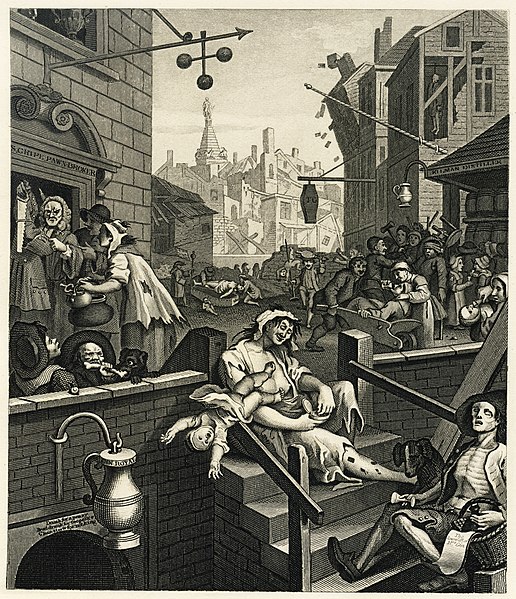
The Gin Craze and Gin Riots


I have this friend, hitherto known as Southwick, whom happens to be one of the few people I know on this earth with an equal love for good gin. I know some Tanqueray drinkers, a few Plymouth drinkers (not bad, it was Winston Chuchill's gin of choice....), and of course the obligatory Bombay drinkers (as though they're devoid of any sense of taste). Even my brother, my own flesh and blood, is a Hendricks gin drinker (look, the Scots can make damn fine whisky, but not gin). But you see, Southwick, he understands all too well that the best gin this planet has to offer, is Beefeater London Dry Gin. You know, the one with the 11th century Tower of London guard on the label-known as a beefeater because their pay included large chunks of beef to keep them strong.

So what's the point of all this? Well there really isn't one, other than to thank him publicly for the Beefeater of his I drank last weekend. Well, that and I was doing some reading earlier on one of the periods of history that's always fascinated me, namely the Gin Craze of the 18th century-the pre-cursor to the '90s crack epidemic, and on account of Wikipedia having terribly little information on it, I thought I'd write a little about it.


Gin, originally known as genever, was invented in Holland by a doctor named Franciscus de la Boe, also known as Dr. Sylvius. It was primarily a Dutch thing, with little exposure to the rest of the world. That all changed in 1689 though, when William III-a Dutchman-took over the English throne. The King made it the official pouring spirit at the palace, and later decided to introduce the drink to the masses, in what turned out to be a pretty huge mistake.

You see, previous to this watered down beer was the beverage of choice across most of Europe. The alcohol in the beer made it safe to drink (as opposed to water) and yet the alcohol content was low enough to make it hydrating. So in what sounds like actually a pretty entertaining existence, people lived life pretty much perpetually buzzed. As alternatives to beer you had wine and brandy (which were almost exclusively French, so unavailable during the dozens of wars), Port and Madeira (the American colonial drink of choice) from Portugal, and Sherries from Spain-all of which were stronger but also more expensive and not available regularly to the common man.

So when William III brough gin to the masses, he thought he was doing them a favor, while at the same time thumbing his nose at France as he increased taxes on French brandy to fuel an increase in English gin production. As it turns out, with it being so easy to make (it's just neutral spirits steeped in juniper berries and other botanicals) and virtually untaxxed, within 20 years it became readily available in large quantities at very low prices to everyone in London. Adding fuel to the fire was the fact that you had a series of economic policies resulting in decreased food prices and increease incomes, so people had a fair amount of disposable income. By 1725 you had over 6,000 shops where gin and other spirits were sold-and that's in just London, at the time a city of 700,000 people roughly the size of Columbus, OH. And that doesn't take into account the people selling gin like 18th century ballpark hot-dog vendors on the streets, nor the market stalls and even wheelbarrows (seriously) that people wheeled around town full of gin for sale.

So as you can imagine, this sort of becomes a problem. As Lord Harvey wrote at the time, "drunkenness of the common people was universal; the whole town of London swarmed with drunken people from morning till night." The cities population began to plummet as people literally drank themselves to death, at sunrise each morning bodies lined the streets of the working class neighborhoods of London, both living and dead while the gutters were filled with shit and vomit. Women, whom actually drank more gin than men (it was also called Mother Genever and Mother's Ruin), were consistently miscarrying as they drank themselves senseless and destroyed their fetuses. In case you think I'm overblowing isolated pockets, this wasn't an isolated things-this was occuring across nearly the whole of London.

Whole industries went bankrupt as their employees wouldn't show up to work, instead choosing to drink gin all day. There are even a dozen reports of spontaneous combustion in London that were reported in London and attributed to gin, which was being distilled most everywhere it possibly could be within the city, and with no regards whatsoever to quality. So as you can see, England had a wee bit of a problem on their hands. While I think we're all pretty much universally united in agreement that drinking is good, having the majority of your workforce be consistently plastered, unwilling to work, unable to pro-create, and dying in the streets isn't exactly a feather in the cap of a King.

In response, the Crown drew up Gin Acts in 1729, '33, '36, '37, '38, '43, '47, and 1751. The problem is, the proletariat didn't like the Crown trying to take away their gin, and in 1743 riots erupted across London resulting in several deaths and a great deal of damage as people took advantage of the last of the cheap gin. At the time of the riots, an estimated 11 million gallons of gin were being made in London, or approximately 14 gallons for each adult male. By the time the Gin Act of 1751 was passed, excise taxes on gin had grown 1200% since the year 1700. In the end though the laws, paired with a few bad harvests resulting in a large decrease in disposable income, worked and by 1757 the Gin Craze had faded.